How Much Does Finish Carpentry Cost? A Pricing Guide
By Nicholas Dunn · June 13, 2026 · 6 min read
TL;DR
In my experience, finish carpentry labor and material for paint-grade baseboard and casing usually lands in the high single digits to mid-teens per linear foot, but that's a rough ballpark, not a quote. Stain-grade hardwood, built-up crown, wainscoting, coffered ceilings, and stairs cost notably more and get priced as their own line items. What you actually pay depends on your market, material grade, profile complexity, and how square your house is.
The honest answer is: it depends, but here's a ballpark to start from. In my experience, paint-grade baseboard and casing (labor plus material) usually runs somewhere in the high single digits to mid-teens per linear foot, while stain-grade hardwood and specialty work like crown, wainscoting, and stairs cost notably more and get priced as their own line items. Those are rough ranges from a decade of installing trim, not a quote for your house.
I want to be upfront before we go further: every number in this guide is a hedged ballpark. Trim pricing swings hard with your region, your material, and your scope. Use these figures to build a planning budget and to spot a bid that's wildly off, not to argue a carpenter down to a number you read online.
What drives the cost of trim?
Trim is mostly labor, and labor scales with difficulty. A handful of factors do most of the work in moving a price up or down:
- Material grade. Paint-grade MDF or finger-joint pine is the floor. Solid poplar costs more, and stain-grade hardwood like oak, maple, or walnut costs a lot more, partly for the material and partly because every joint has to be perfect.
- Profile complexity. A single-piece flat baseboard installs fast. A built-up base or a three-piece crown means more pieces, more joints, and more time per foot.
- Linear footage and openings. Baseboard is priced per linear foot; doors and windows are often priced per opening because each one means mitered or returned casing.
- Labor skill. A carpenter who copes inside corners and gets tight miters costs more per hour than a framer moonlighting on trim, and is worth it.
- The house itself. Tall ceilings mean staging and longer material. Old, out-of-square houses mean every corner gets fitted by hand instead of cut to 45 degrees.
That last one is the hidden driver. In a perfectly square new build, trim flies. In a 1920s house where no two walls meet at a right angle, the same footage can take twice as long because every joint is scribed and fitted.
How much does trim cost per foot by type?
Here's a per-trim-type ballpark, paint-grade unless noted, labor plus standard material. Treat every figure as a rough range that shifts with your market and scope, not a quote:
- Baseboard: roughly the high single digits to mid-teens per linear foot.
- Door and window casing: often quoted per opening; figure a modest per-opening range that climbs fast for wide trim, built-up casing, or stain-grade.
- Single-piece crown molding: typically a few dollars more per linear foot than baseboard, because crown is cut on two planes and copes are slow.
- Built-up crown (multi-piece): a separate line item, often well into the teens or higher per linear foot depending on how many pieces stack.
- Wainscoting and wall paneling: priced per square foot or per wall, and meaningfully higher than running trim; raised-panel and frame-and-panel are at the top.
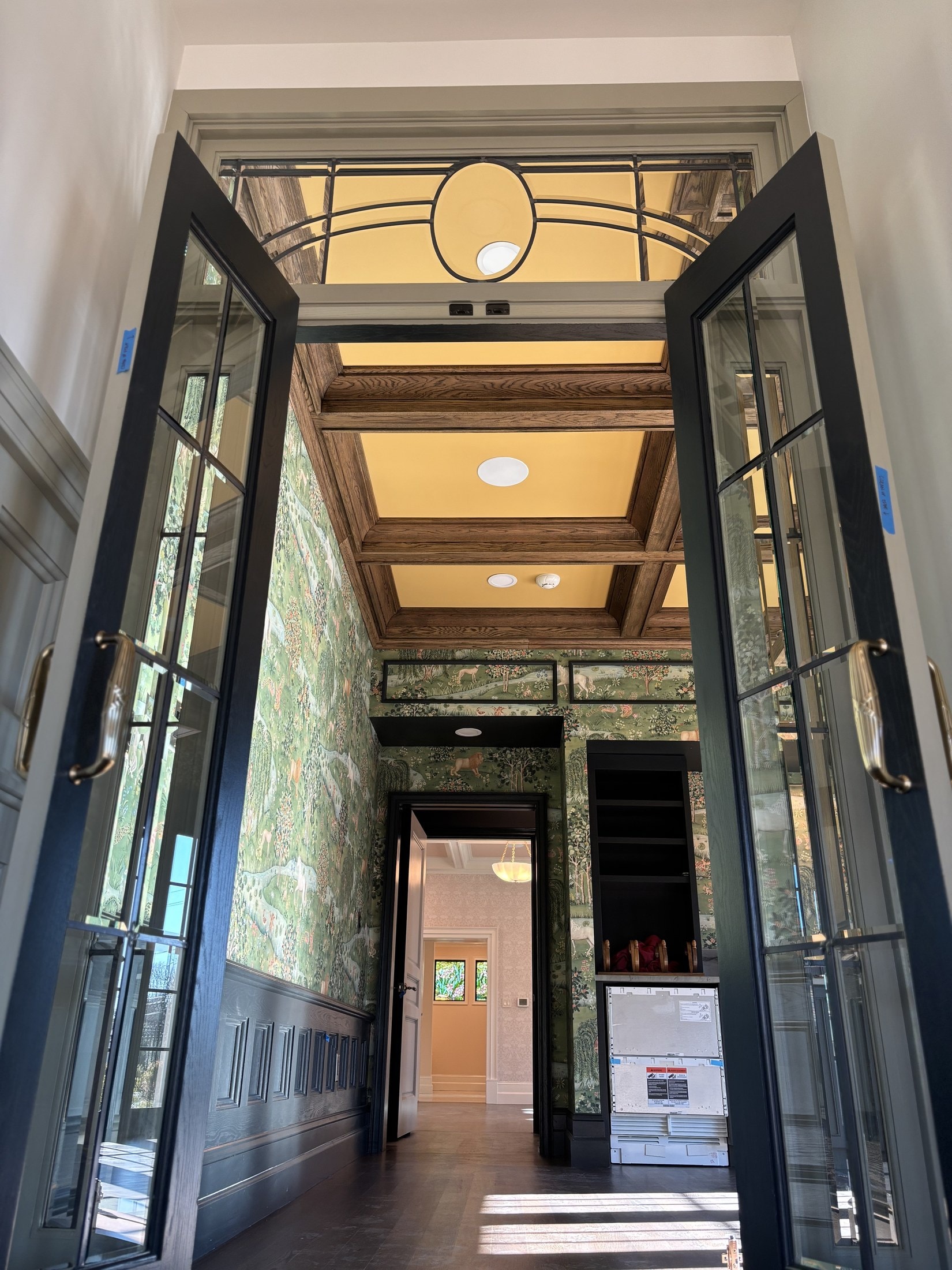
- Coffered and beamed ceilings: their own project, usually quoted as a lump sum that runs into the thousands per room because of layout, build-up, and finishing.
- Stairs (treads, risers, skirts, rails): among the most expensive trim work per foot of anything in the house; almost always a standalone bid.
- Built-ins and cabinetry-style work: priced like furniture, by the unit, not by the foot.
If you want to understand why crown and wainscoting carry their own pricing logic, I dig into the details in my pieces on crown molding profiles and wainscoting proportions. The short version: more planes, more pieces, more joints, more money.
How much to trim a whole house?
For a planning estimate, I think in two layers: running trim (base and casing) priced per linear foot and per opening, then specialty work added as separate line items. As a hedged ballpark, a straightforward paint-grade whole-house trim package tends to land in the low-to-mid four figures per room of base and casing, scaling with footage and opening count.
Stain-grade changes the math. Real hardwood, tighter joinery, and more finishing can push the same house to a multiple of the paint-grade number. And anything fancy, such as crown in every room, a wainscoted dining room, a coffered ceiling, or a rebuilt stair, gets added on top as its own line. I've seen "just trim" budgets double once someone adds the features they actually want.
The honest move here is to get a rough linear-foot count and opening count, apply a hedged per-unit range, then treat the total as a starting range and get measured bids. If you're a homeowner trying to set expectations, my guidance for homeowners walks through how to think about scope before you call anyone.
Supply versus install, and who does the finishing?
Two line items cause most of the confusion in trim pricing.
Supply versus install. Some carpenters quote labor only and expect you to deliver material; others supply everything with a markup. Neither is wrong, but they produce very different-looking numbers. If you supply, you own the risk of wrong grade, wrong length, and shortages.
Finishing. Installing trim and finishing trim are different jobs. Caulking, filling nail holes, sanding, and painting can equal or exceed the install labor on a detailed package. A bid that excludes finishing will always look cheaper than one that includes it, and the difference is not a discount, it's a missing scope. Always confirm in writing who caulks, who fills, and who paints.
Why is the cheapest bid risky?
Because the easiest lever to lower a trim price is to spend less time, and time is what makes trim look built-in. The cheapest bid usually wins by cutting the slow steps: coping instead of mitering inside corners, scribing to out-of-square walls, returning casing cleanly, and finishing tight. Skip those and you get gaps that telegraph through caulk, miters that open in a season, and base that rides every wave in the wall.
A low number can also mean the carpenter misread the scope, which means a change order later, or that finishing got quietly dropped. I've written a whole post on the true cost of bad trim work because redoing trim costs far more than getting it right once. The goal isn't to pay the most; it's to compare bids on equal scope and pick the carpenter whose number reflects the work the job actually needs.
How to budget realistically
- Decide paint-grade versus stain-grade first; it changes everything downstream.
- Count it: linear feet of base, number of door and window openings, and list every specialty feature separately.
- Apply hedged per-unit ranges to build a planning budget, then add 10 to 20 percent contingency for an older or out-of-square house.
- Get measured bids and read them line by line. My guide on how to read a trim carpenter's bid shows what to look for.
- Confirm scope in writing: supply, install, caulk, fill, and paint.
Bottom line
Finish carpentry pricing is genuinely "it depends," but it's not a black box. Paint-grade base and casing in the high single digits to mid-teens per linear foot is a reasonable planning anchor; stain-grade and specialty work cost more and get their own line items. The number that matters is the one tied to your measured scope, your material grade, and a carpenter who isn't cutting the slow steps. If you want help turning a vague "what should this cost?" into a realistic budget you can plan around, take a look at how my consulting works and book a free Discovery Call — no obligation, just a straight answer.
About the Author
Nicholas Dunn is a finish carpenter and the founder of Dunn Trim Co., with the better part of a decade at the saw. He helps homeowners, designers, architects, contractors, and trim companies get finish carpentry right. More about Nicholas →