Does Trim Carpentry Add Value to Your Home? What Actually Pays Off
By Nicholas Dunn · June 18, 2026 · 6 min read
TL;DR
Good trim carpentry usually does add value, mostly by raising a home's perceived quality so it shows and sells better. But it's quality over quantity: the right millwork executed cleanly pays off, while undersized or sloppy trim can read as cheap and cost you. What you do and how well it's built matter more than how much you add.
Good trim carpentry usually does add value to a home, mostly by raising how well built and finished it feels, which helps it show and sell better. But it's quality over quantity: the right millwork executed cleanly pays off, while undersized or sloppy work can actually read as cheap and work against you.
I've installed trim across hundreds of homes over about a decade, and I now consult instead of swinging the nailer. So I've watched what holds up, what buyers respond to, and what was a waste of money. Here's the honest version.
Does trim carpentry actually add value, or does it just look nice?
Both, and the "looks nice" part is doing more work than people think. Trim rarely shows up as a number an appraiser circles. What it does is shape the feeling a buyer gets walking through the door. A home with a cohesive trim package feels considered and well built. A home with thin, mismatched, or beat-up trim feels like corners were cut, even when the bones are good.
That feeling translates into how a home shows, how it photographs, and how confident a buyer feels making an offer. So yes, trim adds value, but mostly through perception and presentation rather than a direct dollar-for-dollar return. That's why I won't promise you a specific percentage back. Anyone who does is guessing.
What trim and millwork actually pays off?
The work that earns its keep tends to live where people gather or where they form a first impression, and it's almost always tied to good execution. In my experience, these are the ones worth the money:
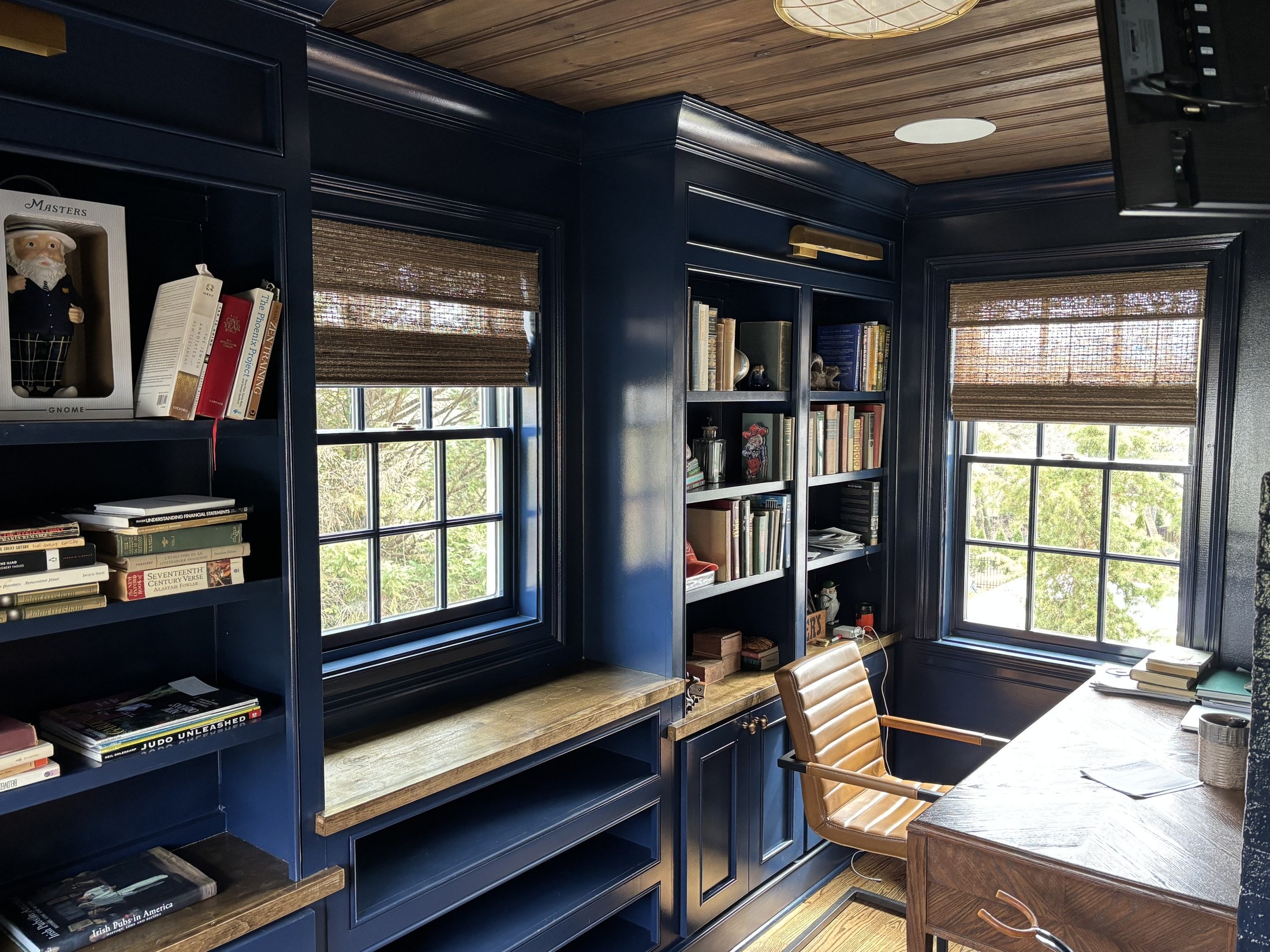
- Built-ins. Bookcases flanking a fireplace, a window seat with storage, a built-in office wall. They read as custom and permanent, and they solve a real problem (storage, function) while looking like a feature.
- A cohesive whole-house trim package. When baseboards, casing, and door styles relate to each other from room to room, the house feels designed. Cohesion often does more than any single showpiece.
- Crown sized correctly. Crown that's scaled to the ceiling height and room proportions. On taller ceilings that can mean a built-up assembly, not a single skinny piece.
- Wainscoting in the right rooms. An entry, a dining room, a stairwell. Placed where it belongs and set at a height that suits the room, it adds character. Everywhere at once, it gets busy.
- A real stair. Stairs are a focal point and people touch them constantly. Tightened-up treads, a proper handrail, and clean skirt and newel detailing elevate the whole entry.
- A mantel. A well-proportioned mantel anchors a living room and gives the eye a place to land. It's a relatively contained project with an outsized visual payoff.
You don't need all of these. Picking two or three and doing them genuinely well beats spreading a thin budget across the whole list. For more on what separates good work from filler, see my guide on the signs of a good trim carpenter.
What trim doesn't pay off (and can backfire)?
Plenty of trim spending gives you little or nothing back, and some of it actively hurts. The usual culprits:
- Undersized or cheap crown slapped up fast. A skinny profile in a tall room looks like an afterthought. Crown that's wrong for the scale draws the wrong kind of attention.
- Trendy treatments done badly. Picture-frame moulding and slat walls can look great, but executed with bad layout and open joints they look like a weekend project gone sideways.
- Trim that fights the home's architecture. Heavy traditional millwork in a clean modern house, or a fussy profile on a simple ranch, feels off. The trim should agree with the house, not argue with it.
- Over-trimming a modest home. Wrapping every room of a starter house in wainscoting and crown often looks forced and prices in detail the market won't pay for.
Why does execution matter more than the feature itself?
This is the part homeowners underrate. The feature you choose matters far less than how well it's built. Buyers feel "well built" subconsciously, and they feel the opposite just as fast, even when they can't name what's wrong.
What sells the quality is the joinery you don't consciously notice:
- Coping on inside corners instead of mitering, so joints stay tight when the house moves.
- Scribing trim and built-ins to walls and floors that are never perfectly flat.
- Clean returns where trim dies into a wall, instead of a blunt cut or a gap.
- Tight and consistent reveals on casing, so everything lines up.
Get those right and the work reads as expensive. Get them wrong and you get the tells of cheap work: open miters that have cracked, caulk smeared into gaps it was never meant to fill, returns that don't match. A buyer registers that as "this house was done on the cheap," and it can taint how they see the rest of it. That's the real downside, and I dig into it in the true cost of bad trim work.
How do I invest in trim wisely?
If you're renovating or getting ready to sell, here's the approach I'd take:
- Start at first impressions and where people gather. The entry, the main living space, the kitchen sightlines, the stair. These do the most for how the home feels.
- Match the home's style and price tier. Let the architecture and the neighborhood set the ceiling. Don't build to a tier the market won't reward.
- Do less, but better. A few rooms executed cleanly beat a whole house of rushed work. Quality is the value.
- Hire for the joinery. Coping, scribing, and clean returns are what you're actually paying for. Before you sign anything, it helps to know how to read a bid so you can tell who's planning to do it right.
On cost, I'll stay honest: it varies a lot by market, materials, and scope. A single room of nice wainscoting might run a few hundred to a couple thousand dollars, while a full package with crown, built-ins, and stair work can climb into the tens of thousands. Treat those as rough ballparks, not quotes. The point isn't to spend the most. It's to put a measured budget where it shows and to insist the work be done well. If you're weighing options for your own house, the homeowner resources and my consulting services walk through how to prioritize.
Bottom line
Trim carpentry adds value when it's the right work, in the right rooms, executed cleanly. It can lower value when it's undersized, sloppy, or fighting the house. Lead with quality, start where first impressions are made, match the home, and do less but better. That's how trim pays off.
If you want a second opinion before you spend, book a free Discovery Call and we'll talk through where your money will actually do the most good.
About the Author
Nicholas Dunn is a finish carpenter and the founder of Dunn Trim Co., with the better part of a decade at the saw. He helps homeowners, designers, architects, contractors, and trim companies get finish carpentry right. More about Nicholas →